

Excursions
POST-CONFERENCE SHORT TRIPS
These half-day trips on Friday 10th July are self-drive, self-funded. Participants must provide their own refreshments and lunch. Booking is not required, but sign-up sheets for each trip will be posted on the notice board.
Makhonjwa Geotrail
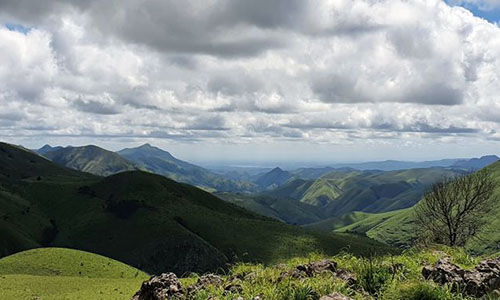

The Makhonjwa Geotrail, located in Barberton, offers a world-class outdoor experience that doubles as a journey through the Earth’s early history. Stretching approximately 37km between Barberton and the Eswatini border, this scenic route is famous for showcasing some of the oldest and best-preserved volcanic and sedimentary rocks on the planet, dating back more than 3 billion years. The trail features informative panels at various points, explaining the complex geological processes, while visitors enjoy sweeping views of the Barberton Greenstone Belt and the surrounding valleys.
Sudwala Caves


The Sudwala Caves are widely regarded as the oldest known caves in the world, dating back approximately 240 million years. Located in the Mankelekele Mountain range, this natural wonder offers visitors an opportunity to observe ancient stalactites and stalagmites, as well as fossilized colonies of collenia (blue-green algae that are among the earliest life forms on the planet). For the more adventurous, a specialized excursion leads visitors further into the cave to an underground chamber adorned with sparkling aragonite crystals.
Pilgrim’s Rest
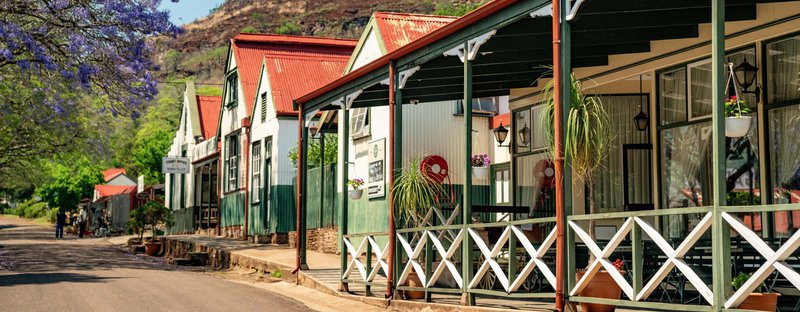
Pilgrim’s Rest is an historic living museum town located on the magnificent Panorama Route in the Kruger Lowveld region of Mpumalanga. This quintessential mining town was declared a National Monument in 1986 as the entire village is meticulously preserved to reflect its origins as a thriving mining hub, transporting visitors back to the 1870s Transvaal gold rush. The town is famous for its original corrugated iron houses and Victorian-style buildings preserved through the efforts of dedicated historians, architects, and curators. The area offers visitors an authentic experience of natural, cultural and historical features present during the late 1800s and early 1900s.
Kaapschehoop


Kaapschehoop is an enchanting, historic village perched on the edge of the Drakensberg Escarpment in Mpumalanga. Founded during the 1880s gold rush, this high-altitude settlement has transformed into a tranquil retreat known for its unique biodiversity and historical charm. The village is most famous for its herd of wild horses that roam freely through the streets and surrounding grasslands. The town maintains a distinct Victorian character, featuring cosy pancake houses, artisanal shops and the historic Salvador Bistro. Visitors can also explore hiking trails to Battery Creek Falls, horseback riding through the surrounding forests and a landscape of weathered sandstone formations that create a natural labyrinth, referred to as Adam’s Calendar.
Bourke’s Luck Potholes


Bourke’s Luck Potholes is a spectacular geological phenomenon located at the confluence of the Treur and Blyde Rivers within the Blyde River Canyon along the Panorama Route. This natural attraction was formed over millennia as swirling water and pebbles eroded deep, sandstone bedrock. A series of pedestrian bridges and walkways provide safe vantage points directly over the swirling waters, offering visitors an excellent view from above. A small on-site museum provides additional information on the natural history, geology, and early mining efforts of the area. Other nearby features of the Panorama Route include God’s Window, the Tree Rondawels and various viewpoints of waterfalls situated along the edges of the route.
Post-conference 4 day trip
THULAMELA AND THE FAR NORTH OF KRUGER NATIONAL PARK
This post-conference excursion will take the travelling party to the well-known archaeological site of Thulamela and explore its surrounding heritage landscape.
The tour will depart on Friday 10 July, travelling around the western boundary of the national park from Mbombela (Nelspruit), entering via Phalaborwa Gate, and stopping for the first night at Mopani Camp. On Saturday the group will travel to Pafuri River Camp, which will serve as our base for visiting the heritage sites.
This is a self-drive tour, but carpools will be arranged once attendance has been confirmed. Participants are encouraged to drive in convoy; however, arrival times will be provided for each destination for those who wish to depart earlier to game-drive en route.
Access to the national park and all archaeological sites, as well as accommodation and three dinners, is included in the total cost. In some instances, local guides will be used, and a gratuity for these guides will be covered from the tour fee. While there is no expectation to tip individually, participants are welcome to do so should they wish.

DAILY OUTLINE

Day 1: Mbombela to Mopani Camp
We will depart from Mbombela at 06:00, arriving at the Masorini Archaeological Site near Phalaborwa Gate at approximately 13:00. Masorini was excavated in the 1970s and played an important role in stimulating interest in the archaeological history of the national park. The excavations were conducted by the National Museum in collaboration with park staff, including Johan Verhoef, who would later be involved in the Thulamela excavations.
Following a guided visit to Masorini, we will continue to Mopani Camp for our first overnight stay. If time permits, we will make a brief stop at Tshikumbu Hill, a 19th century occupation associated with mining activity in the Phalaborwa region and possibly the residence of a local chief.
Dinner will be at the Mopani Camp restaurant for participants’ own account.
Day 2: Mopani Camp to Pafuri River Camp

En route to Pafuri River Camp, and after crossing the Tropic of Capricorn, we will stop briefly at Red Rocks near Shingwedzi. This striking geological exposure marks the contact between ancient gneiss (c. 3.4 billion years old) and much younger sandstone (c. 190 million years old). The geosite lies within the Shingwedzi River, which has eroded and exposed the characteristic red, weathered sandstone.
Continuing north, shortly after the Punda Maria turn-off, we will visit Matjigwili, a Late Iron Age settlement situated on a low hill close to the tarred road. The summit is encircled by stone walling. The site was excavated in 1992 by staff from the National Museum, although only a test trench was opened. A single radiocarbon date places the occupation in the mid-second millennium AD.
Our final stop for the day will be at the Luvuvhu River bridge, where visitors are permitted to exit their vehicles. The bridge offers expansive views both upstream and downstream and overlooks a stretch of river frequently visited by wildlife and rich in birdlife.
Dinner will be in camp and hosted by the organisers.
Day 3: Pafuri Section

We will depart at 07:00 to arrive at Thulamela by approximately 08:30 for a guided tour of the site. The visit will begin at the base of the hill and follow a rocky ascent through the settlement, with particular emphasis on the stone-walled enclosure. The walk covers approximately 2 km, with an elevation gain of around 120 m.
Refreshments will be served at the base of Thulamela following the tour.
Thereafter, we will cross the Luvuvhu River into the Makuleke Contractual Park to visit Gwalala Hill, located north of Crooks Corner. Gwalala dates to the early Thulamela phase and represents a substantial settlement with strong evidence for trade connections. If time allows, we will also visit the remains of the historic store at Gwalala.
A picnic lunch will be enjoyed on the banks of Rheebok Vlei, an excellent birding locality and a relatively little-visited wetland area within the park. Please be mindful of crocodiles and hippos.
In the afternoon, the group will visit Crooks Corner, where South Africa, Mozambique, and Zimbabwe meet, and hear a short presentation on the historical and geopolitical significance of this location. Afterwards, participants may spend the remainder of the day as they wish – game driving, returning to camp for a swim, or relaxing at camp.
Dinner will be in camp and hosted by the organisers.
Day 4: Pafuri Section
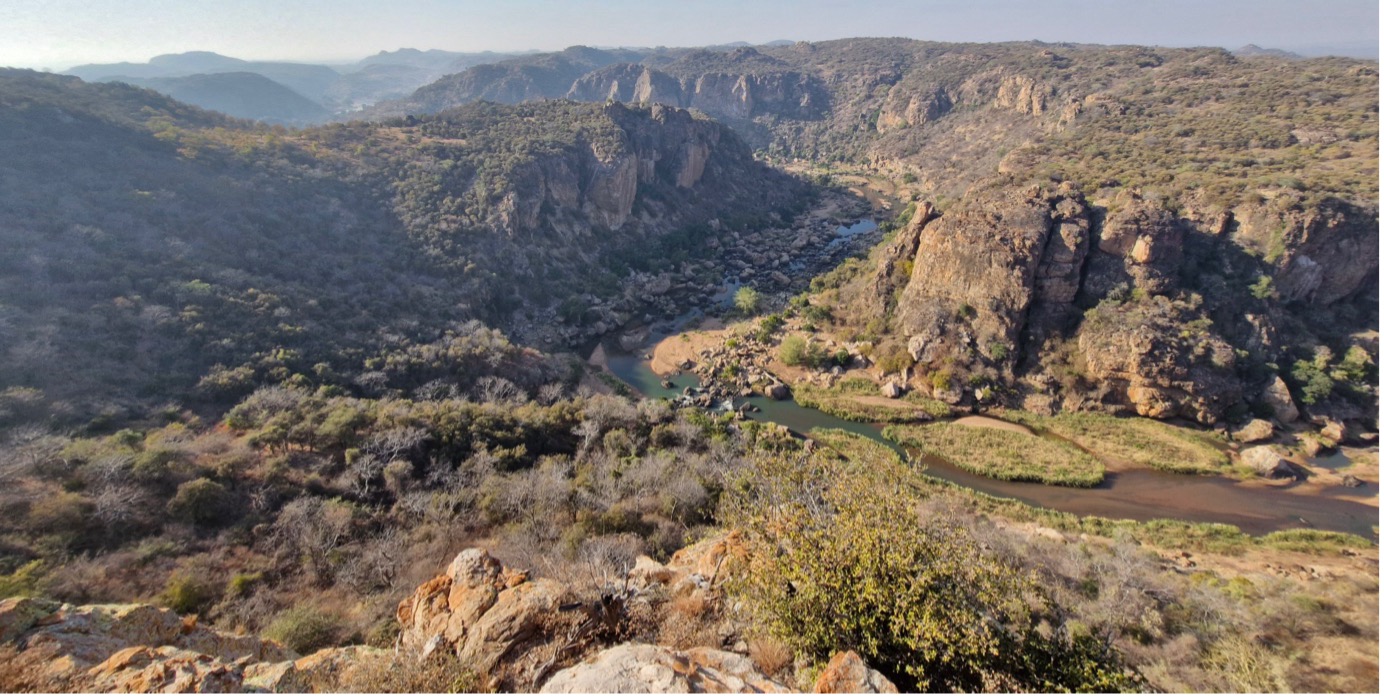
The day will begin with a 07:00 departure to visit Deku, the Makuleke village. Here, community members will share the Makuleke history and guide us through the site. The visit will include a walk through the main village area to the remains of historic shops and a Lutheran church. The site extends along a low ridge and offers a rich combination of cultural heritage, birdlife and occasional wildlife sightings.
Following the visit to Deku, we will drive to the Pafuri Picnic Site for lunch. This well-known birding locality provides a pleasant stop-off point. The remainder of the afternoon will be free for game driving. The route from Crooks Corner past the picnic site and southwards towards Thulamela is particularly rewarding for wildlife viewing.
For those interested, the Pafuri Border Post is accessible, and, with a passport, so is a quart of 2M (Mac-Mahon) or Laurentina!
Dinner will be in camp and hosted by the organisers.
Day 5: Departure
All guests return home.